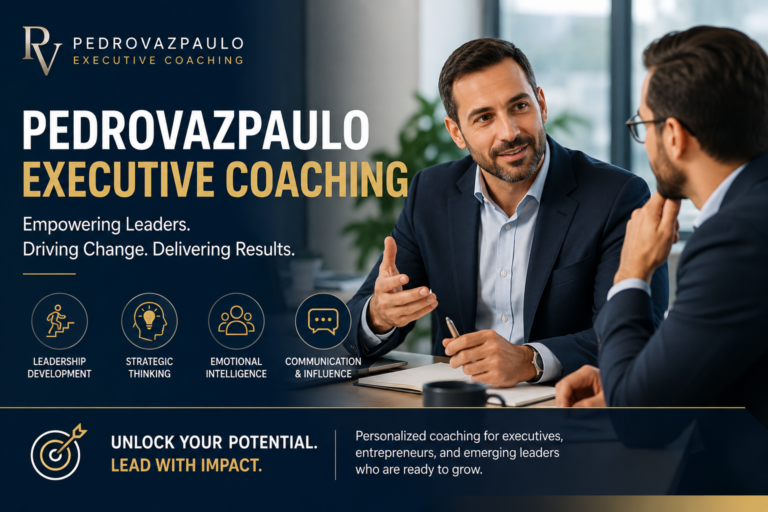
What Is PedroVazPaulo Executive Coaching?
Leadership today is more demanding than ever. Executives, founders, and senior managers face constant pressure to make strategic decisions, manage teams, drive growth, and adapt to rapid change. This is where PedroVazPaulo Executive Coaching positions itself as a leadership development and business coaching service focused on helping professionals improve performance, decision-making, communication, and long-term leadership effectiveness.
The coaching approach centers on personalized guidance rather than generic leadership training. Instead of using a one-size-fits-all model, the program emphasizes tailored coaching plans designed around each leader’s goals, challenges, and organizational context. According to information published across PedroVazPaulo coaching platforms, the service focuses on leadership mindset development, strategic thinking, emotional intelligence, and accountability.
Whether someone is leading a startup, managing a growing organization, or preparing for a senior executive role, the coaching framework aims to provide structured support for both professional and personal growth. For more insights read here:-fintechzoom io courses and growthscribe marketing agency.
The Philosophy Behind PedroVazPaulo Executive Coaching
Personalized Leadership Development
One of the defining characteristics of PedroVazPaulo Executive Coaching is its individualized approach. The coaching process typically begins with an assessment of leadership strengths, development areas, career goals, and organizational challenges. This evaluation helps create a coaching plan tailored to the executive’s specific circumstances.
Personalized coaching can be particularly valuable because leadership challenges vary significantly across industries and organizational sizes. A startup founder dealing with rapid scaling may require different guidance than a corporate executive managing a large team.
Focus on Self-Awareness and Growth
The coaching methodology places significant emphasis on self-awareness. Leaders are encouraged to examine their decision-making habits, communication styles, strengths, and blind spots. Greater self-awareness often leads to better leadership outcomes because executives can recognize how their behavior influences teams and organizational culture.
Rather than focusing only on short-term performance improvements, the program promotes continuous leadership development. This long-term perspective helps leaders build sustainable habits that remain valuable throughout their careers.
Practical Business Application
Many leadership programs focus heavily on theory. PedroVazPaulo coaching highlights practical application by connecting coaching conversations to real workplace situations. Executives are encouraged to apply new strategies directly to ongoing business challenges, team management issues, and organizational goals.
This practical orientation can help bridge the gap between leadership concepts and measurable workplace improvements.
Core Areas of Executive Coaching
Leadership and Executive Presence
Strong leadership extends beyond authority or job title. It requires the ability to inspire confidence, communicate vision, and guide teams through uncertainty.
PedroVazPaulo Executive Coaching focuses on helping leaders strengthen executive presence, build credibility, and improve their ability to influence stakeholders. Coaching sessions often explore leadership style, confidence, authenticity, and team engagement strategies.
Developing executive presence can be especially important for newly promoted leaders who are transitioning into higher levels of responsibility.
Strategic Thinking and Decision-Making
Executives frequently face complex decisions with significant business consequences. Strategic thinking is therefore a major component of leadership effectiveness.
The coaching framework emphasizes decision-making processes, long-term planning, and the ability to evaluate risks and opportunities. Leaders learn how to balance short-term operational demands with broader organizational objectives.
As organizations become increasingly complex, the ability to think strategically often separates strong leaders from exceptional ones.
Emotional Intelligence Development
Emotional intelligence remains one of the most valuable leadership competencies in modern business. Leaders with high emotional intelligence are often better equipped to build relationships, navigate conflict, and maintain team morale.
PedroVazPaulo coaching highlights emotional intelligence as a core leadership skill. Coaching sessions may focus on self-regulation, empathy, active listening, and relationship management. These abilities contribute to stronger workplace communication and healthier organizational cultures.
Communication and Influence
Communication challenges can undermine even the most capable leaders. Clear messaging, active listening, and effective stakeholder management are essential for leadership success.
The coaching process often includes communication development exercises designed to improve presentations, meetings, conflict resolution, and team interactions. Leaders learn how to adapt communication styles for different audiences and situations.
Better communication often results in stronger collaboration, improved alignment, and greater trust within organizations.
How the Coaching Process Works
Initial Assessment
The journey generally begins with a detailed assessment phase. This stage examines leadership strengths, development opportunities, business challenges, and personal objectives.
Some coaching programs also incorporate feedback tools, leadership evaluations, or 360-degree assessments to provide a broader perspective on leadership effectiveness.
The goal is to create a clear starting point for future growth.
Goal Setting and Strategic Planning
Once the assessment is complete, measurable goals are established. These goals may relate to leadership effectiveness, career advancement, team performance, communication, or business growth.
Clear objectives help maintain focus throughout the coaching engagement and provide a framework for evaluating progress over time.
One-on-One Coaching Sessions
A central feature of PedroVazPaulo Executive Coaching is personalized one-on-one coaching. These sessions create a confidential environment where executives can discuss challenges, test ideas, and explore solutions.
Because sessions are tailored to individual circumstances, leaders can focus on the issues most relevant to their roles and responsibilities.
Accountability and Progress Tracking
Growth requires consistent action. Coaching therefore includes ongoing accountability mechanisms that encourage leaders to implement new strategies and monitor progress.
Regular reviews help identify what’s working, what needs adjustment, and where additional development may be beneficial.
Who Can Benefit from PedroVazPaulo Executive Coaching?
CEOs and Senior Executives
Senior leaders often face isolation in decision-making because few people within the organization can provide truly objective feedback.
Executive coaching offers a trusted environment for discussing strategic challenges, leadership concerns, and organizational priorities.
Business Owners and Entrepreneurs
Entrepreneurs frequently balance leadership, operations, growth, and innovation simultaneously. Coaching can help them develop stronger leadership habits while maintaining strategic focus during periods of expansion.
Emerging Leaders
Professionals transitioning into leadership positions often encounter new challenges involving delegation, communication, and team management.
Coaching provides support during this critical career stage by helping emerging leaders build confidence and develop essential leadership skills.
Leadership Teams
Beyond individual coaching, leadership teams can benefit from group coaching initiatives that strengthen alignment, collaboration, and shared strategic direction. Also explore:-ernest khalimov and anand piramal age.
Key Benefits of Executive Coaching
Executives who engage in structured coaching programs often seek improvements in several areas:
- Stronger leadership effectiveness
- Better decision-making under pressure
- Enhanced emotional intelligence
- Improved communication skills
- Greater confidence and executive presence
- Increased team engagement
- Better delegation and accountability
- Improved strategic thinking
- More effective conflict resolution
- Sustainable professional growth
These benefits align closely with the objectives highlighted throughout PedroVazPaulo’s executive coaching framework.
Frequently Asked Questions
Q: What is PedroVazPaulo Executive Coaching?
A: PedroVazPaulo Executive Coaching is a leadership development and business coaching service designed to help executives, managers, entrepreneurs, and emerging leaders improve leadership effectiveness, decision-making, communication, and overall professional performance.
Q: How is executive coaching different from leadership training?
A: Traditional leadership training often follows a standardized curriculum. Executive coaching is personalized and focuses on an individual’s specific goals, challenges, and leadership context. The coaching process adapts to the client’s needs rather than delivering the same content to everyone.
Q: Who should consider executive coaching?
A: Executive coaching can benefit CEOs, business owners, senior managers, high-potential employees, and professionals transitioning into leadership roles. Anyone seeking to strengthen leadership skills and career growth may find value in coaching.
Q: What skills does executive coaching help develop?
A: Common focus areas include strategic thinking, communication, emotional intelligence, decision-making, conflict resolution, leadership presence, team management, and personal accountability.
Q: How long does executive coaching typically last?
A: The duration varies depending on goals and coaching arrangements. Some leaders work with coaches for a few months to address specific objectives, while others engage in longer-term development partnerships focused on sustained growth and leadership evolution.
Conclusion
PedroVazPaulo Executive Coaching is built around the idea that exceptional leadership can be developed through self-awareness, strategic thinking, accountability, and continuous improvement. By combining personalized coaching, leadership development frameworks, and practical business application, the program aims to help executives navigate complex challenges while strengthening their effectiveness as leaders.
For professionals seeking to improve communication, sharpen decision-making, build emotional intelligence, or prepare for greater leadership responsibilities, executive coaching can provide a structured path toward growth. In an increasingly competitive business environment, investing in leadership development remains one of the most valuable decisions a professional can make.