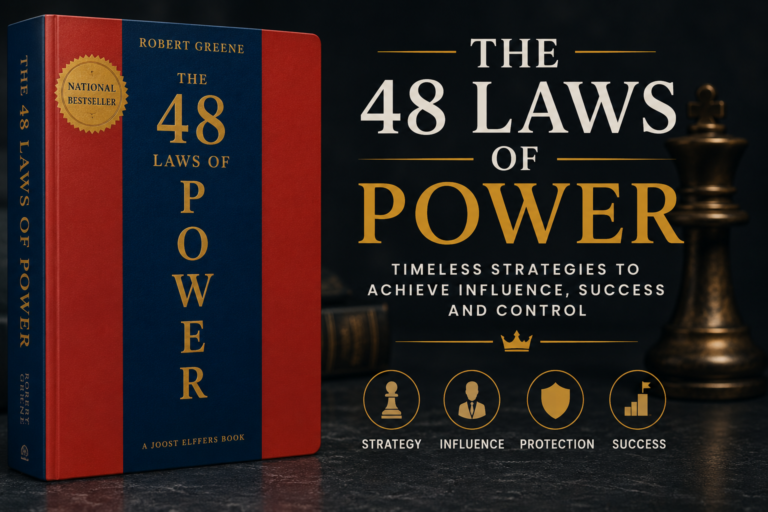
The 48 Laws of Power is one of the most discussed strategy books of the modern era. Written by Robert Greene and first published in 1998, it examines recurring patterns of influence, leadership, and political behavior through historical examples spanning thousands of years. Rather than presenting a traditional self-improvement guide, the book explores how power has been gained, maintained, and lost across different societies.
Whether you view it as a practical manual, a historical study, or a controversial work on human behavior, the book continues to spark debate among business leaders, entrepreneurs, students, and readers interested in psychology. This guide explains what the book is about, highlights its major themes, discusses some of its best-known laws, and explores both its strengths and criticisms. Also explore:-how can you save money and picky eaters.
What Is The 48 Laws of Power?
The 48 Laws of Power is a nonfiction book by Robert Greene that combines historical case studies, philosophical ideas, and strategic observations into forty-eight principles. Each chapter focuses on one law and includes examples of historical figures who succeeded or failed by following or ignoring that principle. Greene draws inspiration from thinkers such as Niccolò Machiavelli, Sun Tzu, and Carl von Clausewitz, along with rulers, military leaders, politicians, and influential public figures throughout history.
Unlike many leadership books, the author does not claim every law is morally right. Instead, he presents them as recurring patterns found in politics, business, and social dynamics. Readers are encouraged to understand how power operates, whether they intend to pursue influence or simply recognize it in others.
Why Has the Book Become So Popular?
A Unique Blend of History and Psychology
One reason for the book’s enduring popularity is its storytelling approach. Instead of relying on abstract theories, Greene illustrates each law with historical events involving emperors, generals, diplomats, artists, and business figures.
These narratives make complex ideas memorable while encouraging readers to think critically about leadership, ambition, reputation, and human nature.
Practical Lessons Beyond Politics
Although many examples come from royal courts and military history, readers often apply the concepts to modern workplaces, negotiations, entrepreneurship, and professional relationships.
Many readers interpret the laws less as instructions for manipulation and more as warnings about how influence operates in competitive environments. This practical perspective has helped the book remain relevant decades after publication.
A Book That Sparks Debate
Its controversial reputation has also contributed to its success. Some readers praise it as a realistic guide to understanding power, while others criticize its emphasis on manipulation and strategic deception.
That ongoing debate keeps the book widely discussed in business circles, book clubs, podcasts, and online communities.
Key Themes Throughout the Book
Reputation Is Valuable
One recurring message is that reputation shapes opportunities. Greene argues that people often make decisions based on perception before they evaluate facts.
Whether someone agrees with every recommendation or not, maintaining credibility and professionalism remains widely accepted as an important leadership principle.
Human Nature Changes Slowly
The author believes that many social behaviors have remained surprisingly consistent throughout history. Competition, ambition, trust, fear, and status continue to influence relationships today much as they did centuries ago.
This historical perspective explains why the book repeatedly references ancient kingdoms, European courts, and famous political leaders.
Strategic Thinking Matters
Rather than encouraging impulsive decisions, many chapters emphasize patience, planning, observation, and emotional control.
Several laws suggest that reacting emotionally often weakens a person’s position, while careful preparation creates long-term advantages.
Some of the Most Well-Known Laws
While the book contains forty-eight separate principles, a handful have become especially famous.
Law 1: Never Outshine the Master
Perhaps the most quoted law advises readers not to make powerful people feel threatened by displaying superiority too openly.
In modern workplaces, many interpret this as understanding organizational dynamics rather than hiding talent. Respecting mentors while demonstrating value diplomatically can strengthen professional relationships.
Law 3: Conceal Your Intentions
Greene suggests that revealing every plan too early may invite resistance or unnecessary competition.
Many readers adapt this lesson by focusing on thoughtful communication rather than complete secrecy. In business, confidentiality during negotiations or product development can be strategically important.
Law 4: Always Say Less Than Necessary
This principle encourages restraint in communication.
Speaking carefully often prevents misunderstandings while making important statements carry greater weight. Many leadership experts also emphasize listening as an essential communication skill.
Law 5: Guard Your Reputation
The book repeatedly argues that reputation influences trust, authority, and opportunity.
Today, this lesson extends naturally to professional branding, online presence, customer relationships, and ethical decision-making.
Law 28: Enter Action With Boldness
Greene argues that hesitation often creates uncertainty, whereas decisive action can inspire confidence.
Modern readers frequently interpret this law as encouraging calculated confidence rather than reckless behavior.
Can These Laws Be Applied Ethically?
One of the most common questions surrounding The 48 Laws of Power is whether its lessons encourage manipulation.
The answer depends largely on interpretation. Some readers use the book to recognize manipulation instead of practicing it. Others view it as a study of political behavior rather than a moral guide.
Many of its broader principles—such as protecting your reputation, thinking strategically, communicating carefully, and remaining emotionally composed—can be applied ethically in leadership and business. The more aggressive recommendations are often treated as historical observations rather than everyday advice.
Major Criticisms of the Book
It Can Encourage Manipulative Thinking
Critics argue that some laws promote deception, excessive competition, or treating relationships as power struggles.
Because many examples involve rulers, military campaigns, and political intrigue, some readers feel the advice does not always translate well to healthy personal relationships.
Some Laws Seem to Contradict Each Other
For example, one law emphasizes attracting attention, while another encourages blending in.
Greene addresses this by suggesting that successful people adapt their strategy to the situation rather than following rigid rules. Critics, however, argue this flexibility can make the framework difficult to evaluate objectively.
Historical Examples May Oversimplify Events
Historians have noted that many complex historical events involved numerous social, economic, and political factors beyond the single lesson highlighted in each chapter.
As a result, the book is often appreciated more as strategic literature than as an academic history text.
Who Should Read The 48 Laws of Power?
This book may appeal to:
- Business professionals interested in workplace dynamics
- Entrepreneurs and founders
- Students of leadership and negotiation
- Readers interested in political history
- Psychology and strategy enthusiasts
- People who want to recognize manipulation rather than fall victim to it
Readers seeking a traditional motivational or self-help book may find its tone unusually pragmatic and, at times, intentionally provocative.
Frequently Asked Questions
Q: Is The 48 Laws of Power based on true history?
A: Yes. Robert Greene supports each law with historical examples involving rulers, military leaders, political figures, artists, and influential personalities. While the interpretations are Greene’s own, many of the historical events themselves are well documented.
Q: Is the book about manipulation?
A: Some chapters discuss tactics that many readers consider manipulative, which is why the book remains controversial. Others view it primarily as a guide to recognizing power dynamics rather than encouraging unethical behavior.
Q: Do you need to follow all 48 laws?
A: No. Many readers focus only on the principles they find useful, such as protecting reputation, communicating thoughtfully, or remaining emotionally disciplined. The book itself presents the laws individually rather than requiring them to be followed as a strict system.
Q: Is The 48 Laws of Power suitable for beginners?
A: Yes. Although the book contains numerous historical references, each law is explained through stories and practical commentary, making it accessible to readers without a background in history or political science.
Q: Why is the book still popular today?
A: Its combination of historical storytelling, psychology, strategy, and controversial ideas has helped it remain widely discussed in business, leadership, and personal development communities for more than two decades.
Conclusion
The 48 Laws of Power remains one of the most influential and debated books on strategy and human behavior. Its historical case studies, memorable principles, and provocative ideas have earned both devoted supporters and vocal critics. While not every law is appropriate for everyday life, the book offers valuable insight into reputation, leadership, influence, negotiation, and social dynamics when read with critical thinking.
Approaching the work as a study of power rather than a rulebook allows readers to appreciate its historical lessons while deciding which ideas align with their own values. Whether your goal is becoming a better leader, understanding workplace politics, or simply exploring one of the most talked-about strategy books ever written, The 48 Laws of Power provides a thought-provoking perspective that continues to generate discussion around the world.